
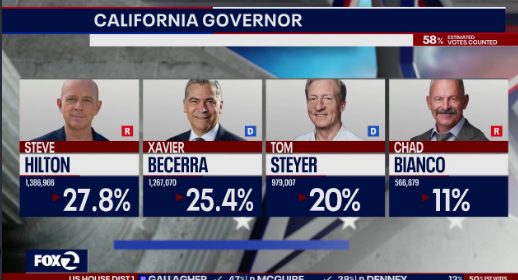
Photo by FOX news
A simple breakdown of the candidates, propositions, and voting information ahead of November 3
You have likely heard about California's upcoming election, officially known as the 2026 General Election, taking place on Tuesday, November 3rd. During this election, Californians will have the opportunity to choose who represents them in government and vote on proposed changes to certain laws and policies.
This election is considered a midterm election because it takes place halfway through a U.S. president's four-year term. It also follows the primary election held earlier this year in June, when voters narrowed down which candidates would advance to November's election. But what exactly are Californians voting for?
Well, there are two main things: candidates and propositions. Candidates are the individuals running for government positions, such as governor, members of Congress, and City Council. Propositions, on the other hand, are proposed changes to laws or government policies that voters can approve or reject by voting "Yes" or "No." To put it simply, voting for a candidate means choosing someone to make government decisions on your behalf, while voting on a proposition means making a decision directly about a particular policy. You can also vote for candidates and propositions independently, meaning you do not have to support a particular political party to vote a certain way on a proposition.
So why is the 2026 General Election important? For starters, California is choosing a new governor. Current Governor Gavin Newsom has served two consecutive four-year terms, meaning he cannot run for another consecutive term.
Along with governor, Californians will vote for members of the U.S. House of Representatives, who represent their congressional districts in Washington, D.C., and members of the California State Legislature, who help create and vote on state laws. Depending on where they live, voters may also choose local officials, including City Council and school board members. Other statewide positions, including officials who oversee elections, state finances, and insurance, are also on the ballot.
There are two candidates running for California governor. The governor is responsible for overseeing state agencies, proposing the state budget, and signing or vetoing state laws.
The first candidate is Xavier Becerra, a Democrat who previously served as California's attorney general and U.S. Secretary of Health and Human Services. His campaign emphasizes lowering living costs, improving healthcare access, and expanding economic opportunities. He generally supports using government programs and investments to address these issues.
His opposing candidate is Steve Hilton, a Republican who previously worked as an adviser to British Prime Minister David Cameron and as a Fox News commentator. His campaign focuses on reducing living costs, cutting government regulations and spending, and changing how California's schools and government operate.
For Stockton residents, the election also includes local races that could directly affect the community. Three Stockton City Council seats are on the ballot: Districts 1, 3, and 5. In District 1, Michele Padilla is running against Tamica Small, while District 3 features Michael Blower and Jessica Toccoli. In District 5, incumbent Brando Villapudua faces Desiree Lynch, whose name remains on the ballot despite her withdrawal from the race.
Depending on their districts, Stockton voters may also see school board and congressional races on their ballots. These elected officials help make decisions involving public schools, transportation, community development, and other services that affect local residents.
Aside from choosing candidates, Californians will also vote on 14 statewide propositions this November. These cover a variety of issues, including housing, healthcare, taxes, elections, and government policies. Here is a brief breakdown of what each proposition means and what voting "Yes" or "No" would do.
Proposition 1 — Affordable Housing: Would allow California to borrow $11.25 billion to fund affordable housing programs, including assistance for low-income residents, first-time homebuyers, and veterans. Voting “Yes” would approve the borrowing, while voting “No” would reject it.
Proposition 2 — State Emergency Savings: Would require California to save more money in its rainy day fund, which is money set aside for financial emergencies. Voting “Yes” would increase the state's savings requirements, while voting “No” would keep the current rules.
Proposition 3 — Education and Healthcare Funding: Would make existing higher income tax rates on wealthy Californians permanent to help fund education and healthcare. Voting “Yes” would keep these tax rates permanently, while voting "No" would allow them to expire in 2031.
Proposition 4 — Political Campaign Funding: Would allow governments to create programs using public money to help fund political campaigns. Voting “Yes” would allow these programs under certain rules, while voting “No” would keep the current restrictions.
Proposition 5 — Recall Elections: Would change the process for replacing statewide officials removed through recall elections. Voting “Yes” would change how replacements are selected, generally through special elections or appointments, while voting “No” would keep the current process.
Proposition 37 — Homeownership Assistance: Would create a loan program to help eligible middle-income Californians purchase newly built homes. Voting “Yes” would establish the program, while voting “No” would not require the state to create it.
Proposition 38 — Medical Research: Would allow California to borrow $8.4 billion to fund research involving the immune system and related diseases. Voting “Yes” would approve the borrowing, while voting “No” would reject it.
Proposition 39 — Voter Identification: Would require voters to present government-issued identification when voting. Voting “Yes” would establish these requirements, while voting “No” would keep the current voter identification process.
Proposition 40 — Billionaire Tax: Would create a one-time 5% wealth tax on certain California billionaires, with most of the money going toward healthcare programs. Voting “Yes” would approve the tax, while voting “No” would reject it.
Proposition 41 — State Tax Oversight: Would require additional audits of certain tax-funded programs and place restrictions on how new tax revenue is treated under state spending limits. Voting “Yes” would establish these changes, while voting “No” would keep the current rules.
Proposition 42 — Personal Property Taxes: Would prohibit new state taxes on ownership of financial assets and other personal property, along with certain retroactive taxes. Voting “Yes” would establish these restrictions, while voting “No” would keep the state's current authority to create such taxes.
Proposition 43 — Local Taxes: Would require certain voter-proposed local taxes used for specific public services to receive approval from two-thirds of voters instead of a simple majority. Voting “Yes” would establish this higher approval requirement, while voting “No” would keep the current majority-vote requirement.
Proposition 44 — Community Health Clinics: Would require certain community health clinics to spend at least 90% of their revenue on program services. Voting “Yes” would establish this spending requirement, while voting “No” would leave the current rules unchanged.
Proposition 45 — Environmental Reviews: Would change California's environmental review process for certain housing, transportation, and infrastructure projects. Voting “Yes” would establish new procedures intended to speed up project reviews, while voting “No” would keep the current process.
It is also worth noting that Propositions 40, 41, and 42 involve overlapping tax policies, meaning the outcome of one measure could affect how another is implemented.
Although these propositions cover different topics, many could affect the daily lives of Californians, including those living in Stockton. Decisions involving housing, healthcare, education, and taxes could influence living expenses, public services, and opportunities available to students and families. For Pacific students, the election may seem less significant than a presidential election, but decisions made at the state and local levels can still have an impact.
For those planning to vote, California's regular voter registration deadline is October 19th. Those who have not registered can do so at registertovote.ca.gov, and those who miss the deadline can still register through Same Day Voter Registration at designated locations.
Election Day is Tuesday, November 3rd, with polling locations open from 7 a.m. to 8 p.m. Voters can also return their mailed ballots by mail or at official drop-off locations. Stockton residents can find voting locations at sjcrov.org.
For more information on candidates and propositions, voters can visit voterguide.sos.ca.gov.
Ultimately, this election gives Californians the opportunity to choose their representatives and weigh in on policies that could affect their communities and everyday lives. Understanding what is on the ballot can help voters make informed decisions about issues that matter to them.