
Between Brazilian beaches and unexpected friendships, Salvador was full of surprises
After a long 10-day stretch on the Atlantic Ocean, Semester at Sea finally arrived in Salvador, Bahia, Brazil, on October 7th. I had no idea how much I would fall in love with this country, but by the time we left, I knew I needed to return again one day!
We began our first full day by visiting three museums: the Afro-Brazilian Museum, the Carnival Museum, and the Museum of African-Brazilian Architecture. These visits provided valuable context for understanding Salvador’s history and cultural identity.
The Afro-Brazilian Museum introduced us to the history, art, and traditions of Candomblé, an Afro-Brazilian religion rooted in West African spiritual traditions. The Carnival Museum showcased the elaborate costumes, music, and dance that make Carnival such an important part of Brazilian culture. Salvador is especially famous for its enormous street celebrations, which bring people together through music, movement, and joy.
Starting our trip with these museums made the rest of our experiences even more meaningful. We were not just seeing Brazil as tourists; we were beginning to understand its rich history.
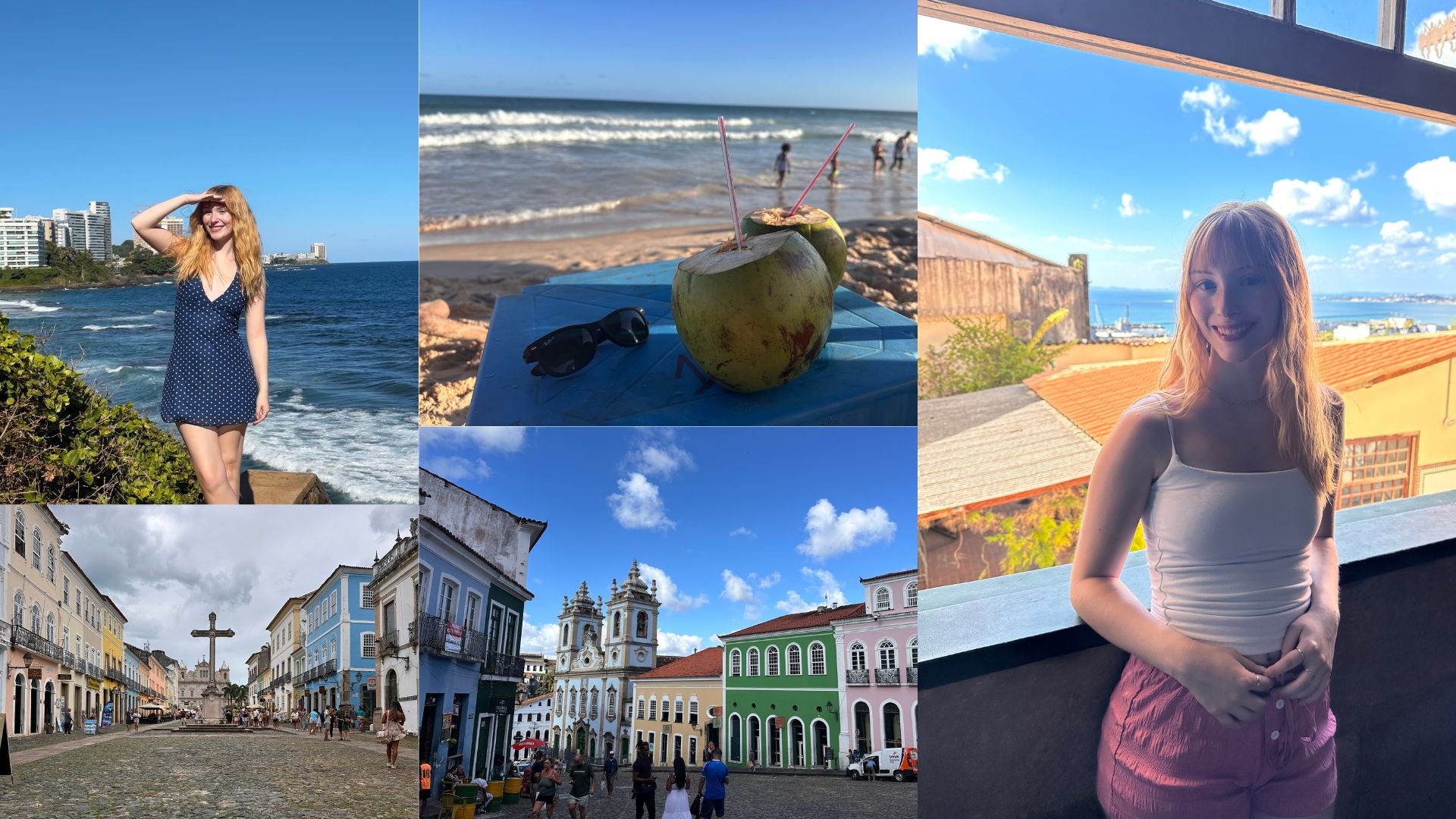
The following day, we explored Salvador’s historic center, Pelourinho, a UNESCO World Heritage Site known for its colorful colonial architecture, cobblestone streets, and historical significance. We also visited a local church and its museum before stopping for a traditional Bahian meal at a neighborhood restaurant. We sampled dishes such as moqueca, a flavorful seafood stew made with coconut milk and palm oil, and feijoada, a hearty bean-and-meat dish popular throughout Brazil. We even tried caipirinhas, Brazil’s famous cocktail made with cachaça, lime, and sugar. It was delicious, welcoming, and exactly the kind of authentic experience I had hoped to find.
One of my favorite afternoons was spent at Farol da Barra Beach, near Salvador’s iconic lighthouse. Vendors sold coconuts, corn, and snacks along the beach while powerful waves splashed toward the shore. The atmosphere was so full of life.
That evening, we attended a Portuguese circus! Although I could not understand every word during the show, I was surprised by how much I could follow through the performers' facial expressions, body language, and music. As a student studying interpersonal communication, I immediately connected the experience to what I had learned in class. It was a reminder that communication extends far beyond words, and that laughter is a universal language!
We also attended a local soccer match: Bahia vs Mirassol. The stadium was enormous, and the energy of the crowd was unforgettable. Even though the game had only one goal, the atmosphere made the experience super worthwhile.
However, the most memorable part of the match happened off the field when my friends and I met João Pedro, a 20-year-old Brazilian university student who shared our love of sports. We started talking, and he helped us understand more about local life and the political atmosphere surrounding the upcoming election. Political posters and campaign advertisements were visible throughout the city, making the election an especially interesting part of the environment to observe. The conversation even gave me ideas for my mass media class project.
The next day, my friends and I met João at his favorite beach, Pipeline. We spent hours talking about our families, hobbies, favorite television shows, and video games. He showed us pictures of his dog and niece and shared some of his favorite places around Salvador. We even discovered a shared appreciation for American sitcoms like Everybody Hates Chris and The Fresh Prince of Bel-Air.
What struck me most was how familiar everything felt. Although João and I had grown up in different countries, we connected over the same things: family, pets, entertainment, sports, and food. We were also the first Americans he had ever met, and he had learned much of his English through television and social media. His English was impressive, and it was exciting to think that our friendship could continue long after we left Salvador.
That afternoon reminded me why I love traveling. Visiting landmarks and learning about history are valuable, but getting to know the people who call a place home offers something entirely different. When we take the time to listen to one another's stories, we often discover that we have far more in common than we expected.
Ultimately, Brazil surprised me in more ways than I can count. I will remember the colorful streets, the music, the beaches, the food, and the rich history of Salvador. But most of all, I will remember the kindness of the people I met, from João to the locals who welcomed us and the drivers who helped us navigate the city.
I am incredibly grateful for my time in Brazil, and I would love to return someday, perhaps to explore the Amazon rainforest next time. For now, see you later, Brazil—and on to South Africa!