
Eating Local - Noodles, Alone
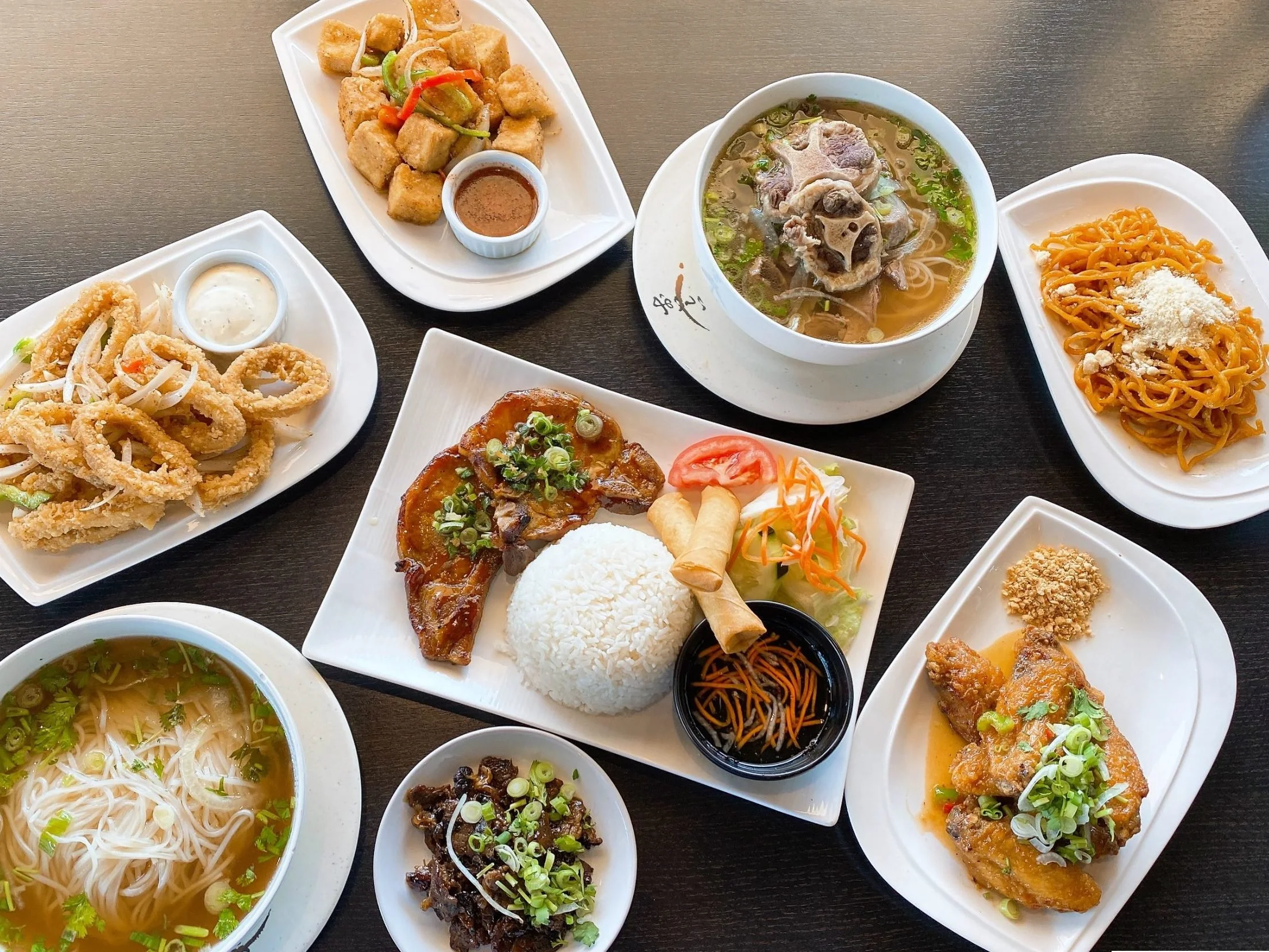
There are few foods as personally intimate as a bowl of phở.
Phở has a unique property: the finishing preparations of the dish are left to the customer. The plate of toppings sitting beside the bowl allows one to customize their meal. Spicy or not spicy. Lime or no lime. The bean sprouts and thai basil are optional, alongside the sriracha, chilli sauce, and hoisin sitting at the end of the table. Your hands partake in the process of creating the dish that you then enjoy. They work in unison with the hands of those behind the swinging kitchen door.
I am new to Pacific. I spent the past year in New York, so moving to my new place in Stockton has given me the opportunity to explore and find some new favorite local food spots (I have to say, I have been impressed by Stockton’s scene thus far). One of my first nights in Stockton, I went to try Phở Island on Miracle Mile. I sat at the bar, alone.
I believe in spending time with oneself, a rather difficult task in today’s world. So often I feel myself pulled in a thousand different ways, all outwards, never inwards. Eating alone affords me the time and solitude to turn my focus inwards. I have eaten many meals alone, near and far, but phở has remained the most dear to my heart. It meets me where I am.
On nights like these, I usually find myself sitting at a suspiciously low table (or an empty bar, in this case), hunched over a simple bowl of rice noodles and rich, steaming broth. Just me, my notebook, a beautiful bowl of goodness before me, and the hands that made it. This experience has become a ritual for me. A ritual I use to center myself. To ground myself for a moment.
Food, like many things, is more than a collection of its ingredients. Food is culture, and culture contains stories. A simple bowl of meat and noodles holds within it a history and tradition that connects its enjoyer through time and geography, to those who came before.
Phở tell us the story of Vietnam. French colonization in the late 19th century increased demand for beef, the bones of which were used to create the Nam Dinh broth (named after the city of Nam Dinh where it was created). The broth traveled with merchants to Hanoi, where it gained rice noodles and meat. After French Colonization ended in 1954, the country was partitioned, and phở split with the country. Phở in the communist-aligned North stayed a relatively simple dish, while the capitalist south’s bowls grew to include a longer list of ingredients; regional styles that remain to this day. While phở has remained true to its roots, many modern variations have appeared as it travels the globe with Vietnamese immigrants. This video features Bau Nguyen, who came to the U.S. as a refugee after the end of the American War in Vietnam, and his restaurant in New Orleans, Singletons. He serves traditional Vietnamese cuisine, but also offers fusion with classic New Orleans creole.
Pho is interwoven into Vietnamese culture, and it has become its biggest culinary export. The famous Vietnamese poet Tu Mo, wrote “An Ode to Pho” about the simple and equitable nature of pho.
Despite this ritual of mine being best practiced alone, it takes more than just myself to come together. It requires the hands of those who spend hours making the slow-cooking broth and those that assemble the meats and herbs before it leaves the kitchen. It requires the hands that worked in Hanoi long ago and the hands that brought their soups and stories across the Pacific, right here to Stockton. All that, for a little ritual in a bowl. I take mine with chili sauce and extra lime.
This time I ordered the Pho Special Combo and a Thai Tea. Supporting locally owned and operated restaurants, like Pho Island, supports the local community. Your dollars circulate through the community, and promote culinary diversity, keeping businesses like these healthy and thriving.
Try something new. Be your own friend. Maybe find some history in a big bowl of noodles, and check out Pho Island on Miracle Mile if you get a chance.
Sources:
https://vietnam.travel/things-to-do/history-pho
https://www.phocoviet.com/en/pho-poetry
https://www.history.com/articles/vietnam-war-history
https://www.tiktok.com/@eatingwithrobert/video/7611324289270254879?_r=1&_t=ZP-9AFm36uDcpL
https://phoislandstockton.com/
https://www.somuchtogivecafe.org/how-supporting-local-restaurants-can-support-your-community