
“Artists Should Support Artists:” Conservatory of Music Faces Backlash on AI Poster
By Austin Nie
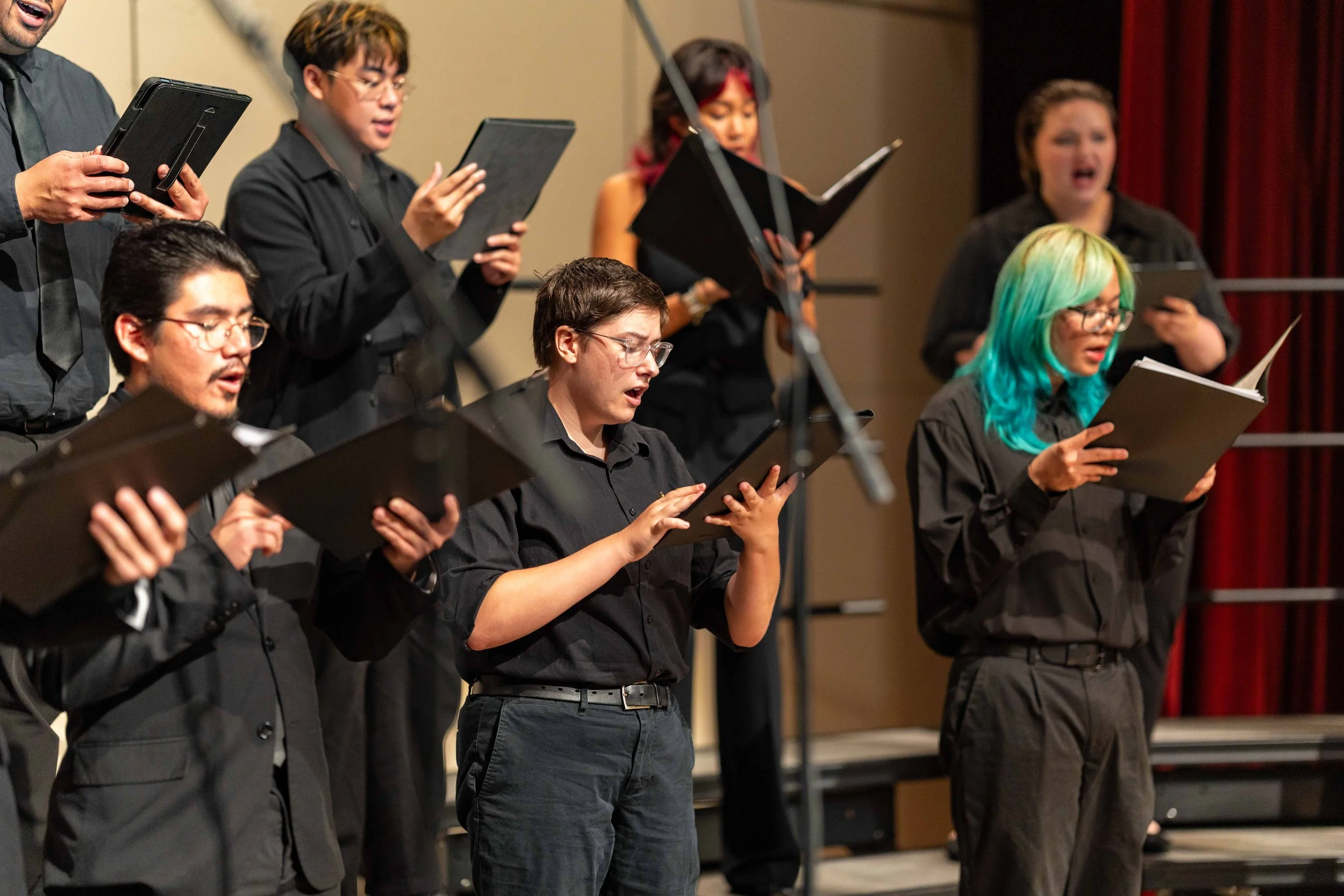
Photo from University of the Pacific’s Conservatory Flickr
Concerns rise surrounding artistic integrity and administrative accountability.
On Friday, April 10th, the Conservatory of Music’s Choirs performed a concert reflecting on America’s history through music. The program explored themes of industrialization and honored the communities who helped shape the country. To promote the show, the Conservatory’s marketing team created and distributed a poster which intended to capture the concert’s message. However, the design quickly became the center of controversy. Within hours of the advertisement being posted on social media, students rushed to the comment section to critique the artistic decisions made for the poster. For many, it was immediately apparent that the picture was AI-generated. The noticeable design characteristics of generative tools sparked frustration over its use in representing a Conservatory event.
As a highly-esteemed institution that promotes artistic integrity and creative expression, the Conservatory of Music faced backlash from students who felt the use of AI replaced opportunities for human artists. They argued that it presented as disconnected and an inaccurate representation of the music and stories the concert aimed to highlight. Many expressed it as disingenuous and contradictory of the standards upheld by the Conservatory.
University of the Pacific has many programs where marketing and promotion courses are embedded in the curriculum, including graphic design, media production, communications, and music industry studies. Across these disciplines, students often seek hands-on opportunities to apply their knowledge in the real world. One student commented on the Instagram post, “I’m sure many UOP conservatory students would be willing to create posters for events [rather than] have AI represent [our] program.”
Others point out additional alternatives, such as ASUOP Creative Services, a team of student leaders who offer free visual promotional material. “[They] could have sent an inquiry to ASUOP Creative Services and had students help support other students,” another commented.
The backlash also reflects a broader tension surrounding AI in creative fields. As AI-generated content becomes more common, students in the arts question its role in spaces that are driven by human expression. Comments such as, “Artists should support artists,” and “No AI music, but AI art is okay?” highlight growing concerns about where the line is drawn.
This tension of justified AI-usage is especially present in higher education. Students are widely prohibited from using AI in the classroom and usage can result in serious consequences, as it is considered a violation of the Student Code of Conduct. Even the “accepted” usages of AI, such as grammatical assistance or outlining a paper, requires a disclosure. This concert poster raised questions about whether or not the faculty and administration are held to those same standards.
As of now, The Conservatory of Music administration has not publicly responded to the criticism they received online, however they have since removed the post off of social media. The original post has dozens of concerned comments from music majors, non-music majors, and Pacific alumni, each using their platform to express frustration and aversion towards the poster. Additionally, on Fizz, there are multiple posts sharing a similar sentiment, garnering thousands of upvotes and interactions, reaching a larger audience of concerned students who rallied behind the Conservatory students.
What began as a promotional concert poster has grown into a larger conversation that extends beyond the Conservatory and into higher education as a whole. The controversy raised questions about the role of AI in creative fields, while also highlighting growing concerns about its usage across the University.
Pacific students expressed their concern of the rise of AI and what they perceive as a double standard. While AI is often restricted for students in coursework, its usage in the administration seems more accepted. This inconsistency has intensified the conversation and poses a larger question of accountability: when the line is drawn, who gets to decide who can cross it?